Project Spotlight: Wataynikaneyap Transmission Project
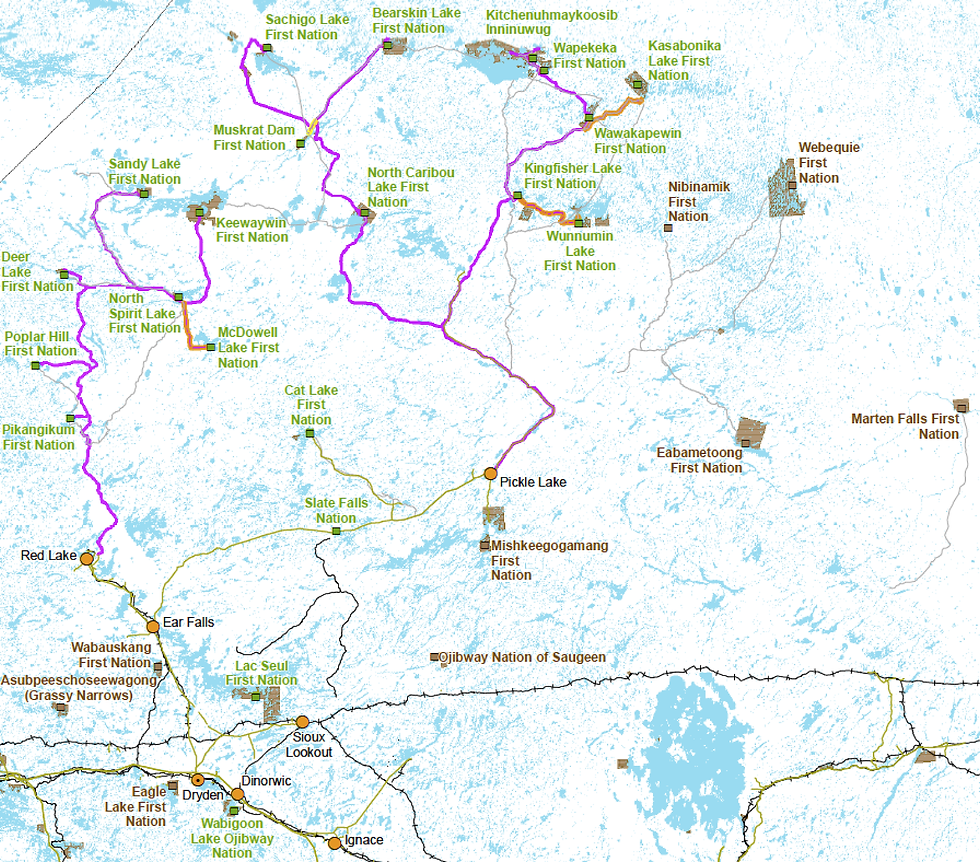
The Wataynikaneyap Transmission Project (“line that brings light”) is a landmark, Indigenous-led transmission build in northwestern Ontario designed to connect remote First Nations reliant on diesel generation to Ontario’s provincial grid. The project is majority owned (51%) by 24 First Nations, in partnership with Fortis Inc. / FortisOntario (49%)—an unprecedented Indigenous ownership model for large-scale infrastructure in Canada.
Project Overview
For decades, many remote northwestern Ontario First Nations have depended on diesel-powered generation. This is often expensive, emissions-intensive, and limiting for housing, community infrastructure, and economic development. Wataynikaneyap was created to change that by extending the grid north and building community-led infrastructure that supports long-term growth.
This transmission system is expected to connect up to 16 remote First Nations in Ontario through approximately 1,800 km of transmission lines and 22 substations, enabling long-term diesel reduction and improved reliability for communities across the Far North.
As of May 2024, all Wataynikaneyap Power assets are energized. ISC reported that Poplar Hill First Nation was grid connected on December 17, 2024, becoming the 13th community connected through the Wataynikaneyap system. Three First Nations are working through their Independent Power Authority processes before they can be connected.
Project Details
Location: Northwestern Ontario
Infrastructure scope: ~1,800 km of transmission lines and 22 substations
Status: Operating
Ownership: 24 First Nations (51%), Fortis Inc./FortisOntario (49%)
Estimated cost: ~$1.9 billion

Indigenous Ownership
Wataynikaneyap is Canada's largest Indigenous-majority owned transmission project with 24 First Nations owning 51% majority stake. This structure is a key part of why the project is viewed as a national case study: it pairs Indigenous majority ownership with an experienced utility partner to execute complex permitting, engineering, and construction at scale.
“We did it. We received our mandate from the Chiefs — bring clean, reliable power to the First Nations, and maintain ownership of any infrastructure on the Homelands. And we delivered.” Frank McKay, Board Chair, Wataynikaneyap Power General Partnership
Funding Details
The Wataynikaneyap Transmission Project is supported by a blended financing structure combining provincial loans, federal funding, commercial lending, and Indigenous-focused financial supports:
The Province of Ontario supported construction through a loan of up to $1.34 billion.
The Government of Canada committed approximately $1.55 billion in federal funding, primarily to repay the Ontario loan and cover additional project-related costs.
A further ~$680 million was provided through a syndicate of Canadian Schedule I banks.
Indigenous equity participation was supported through the Indigenous Opportunities Financing Program, which provided a $232 million loan guarantee, helping reduce financing risk and improve borrowing terms for the First Nations ownership partners.
Together, this financing structure enabled Indigenous communities to retain majority ownership while delivering one of the largest and most complex transmission projects ever constructed in Canada.
Climate and Community Impact
ISC estimates that, over 40 years, the project is expected to result in over 6.6 million tonnes of avoided CO₂e, reflecting the scale of diesel displacement and associated emissions reductions from grid connection. Pembina also notes the project positions Ontario to transition 16 of 25 remote diesel-dependent Indigenous communities off diesel, while highlighting the need for a broader diesel reduction strategy for remaining communities.
Why This Project Matters
Wataynikaneyap is a national benchmark because it demonstrates that:
Indigenous-majority ownership can scale to system-critical infrastructure like transmission—not only generation.
Grid connection is a foundational enabler of housing, essential services, and economic development in remote communities previously constrained by diesel capacity and cost.
Blended capital stacks + partnership delivery models can unlock complex, high-cost northern infrastructure while keeping Indigenous communities in the ownership position.
Indigenous Energy Ownership Tracker
Wataynikaneyap is one of the many Indigenous-owned power projects tracked in IEM’s Indigenous Energy Ownership Tracker (IEOT)—built to centralize project ownership details, identify partnership models, and improve transparency across Canada’s energy transition.
🔗 Explore the IEOT:


Comments